Tag Archives: data compliant

Data Protection and the ICO

Data privacy

Data Protection Complaints 2013 – 2014

Yesterday I read that the Information Commissioner’s Office handled 259,903 calls to its helpline and has resolved 15,492 data protection complaints last year. This is an increase of 10% over the previous year.  And here’s another staggering figure – the ICO received 161,720 reports from people about spam texts and nuisance calls.

Half the total complaints received related to “subject access”, with a range of organisations about whom complaints were made, including lenders, local government, educational providers and local health providers.

The importance of data protection in business

Organisations and businesses can no longer ignore the importance of data protection governance, compliance and security – they now have no choice but to understand and meet their regulatory requirements to avoid the penalties of non-compliance.  Last year’s attitude to and handling of ‘subject access requests’ is a perfect illustration of the current complacency seen among some data users.

The sheer volume of personal data being collected physically and digitally every day is multiplying at an extraordinary rate and organisations are continuing to find ever more complicated ways of using data.  Use of big data continues to develop with organisations trying to navigate their way through woefully outdated legislation.

The importance of the ICO

As a result, the data protection challenges to business, the consumer and the ICO are spiralling. It’s increasingly important for the data subject to know that a strong, independent body – which means the ICO – can be trusted to keep watch and offer protection.

With this increase in volume and demand, it’s hardly surprising that the ICO is calling for greater powers, greater independence, and additional funding.

Funding is a particularly difficult area as the EU data protection reforms currently propose the removal of the notification requirement and accompanying fees that fund the ICO’s DPA work. Lack of funding will inevitably give rise to cuts in the services provided by the ICO – for example, it has no legal obligation to provide a helpline, and reduced funding makes it unlikely to be able to continue to handle its current – let alone future – volumes of calls a year.

So it’s absolutely vital not only to individuals but also to businesses, organisations, government and the ICO itself that necessary resource, funding, independence and evolving powers are provided to allow the Information Commissioner to continue to protect, update and enforce data protection legislation.

ICO’s internal data security breach

However, it is somewhat unfortunate that at the time the ICO is asking for greater funding, independence and stronger powers, they are also admitting to their own “non-trivial” data breach. The incident was treated as a self-reported breach and was apparently investigated and treated no differently from similar incidents reported to the ICO by others. After an internal investigation the ICO concluded that the likelihood of damage or distress to any affected data subjects was low, and that it did not amount to a serious breach of the Data Protection Act. A full investigation was carried out with recommendations made and adopted.

However, later information suggests that this breach is now linked to a criminal investigation. So the breach investigation has not, seemingly, been closed.

Data Compliant

Services

If you have any concerns over data protection compliance or security, don’t hesitate to get in touch – call 01787 277742 or email victoria@datacompliant.co.uk




Data Compliance and Cloud Computing

It’s clear that the innovative and accessible technical services provided by cloud computing are increasingly being selected and used by businesses.  And there are good reasons for doing so – not least accessibility, cost, reliability, resilience, and innovative products.  However, there are also risks to data protection which data controllers need to consider and be sure that such their cloud processing activity complies with the Data Protection Act.

What is cloud computing?

Cloud computing covers a broad range of services and technology, but the Information Commissioner’s Office (ICO) defines it as:

“access to computing resources, on demand, via a network”

To explain:

Resources include storage, processing, software

On Demand simply means that the resources are available to the customer or user on a scalable, elastic basis, typically through virtualised resources

Via a Network refers to the transit of data to and from the cloud provider, which may be over a local or private network, or across the internet.

The Data Protection Act (DPA) and Cloud Computing

All operations involving personal data that take place in the cloud – including storage – must comply with the DPA, and it is the data controller who has ultimate responsibility for that compliance.

However, if layered cloud services are being used (eg different cloud providers of software, platforms or infrastructure) then it’s quite possible that there will be a number of data controllers and data processors working together to deliver services which included processing personal data.

The cloud customer is most likely to be the data controller, and will therefore have overall responsibility for complying with the DPA.  However, depending on precisely the role of the cloud provider, the customer must assess whether the cloud provider is simply a contracted data processor or is, indeed, a data controller in its own right – which may be the case if a cloud provider in any way determines the purpose(s) for which the personal data are to be processed. In this case the cloud provider will be responsible for its own data protection compliance.

12 Cloud-specific DPA Considerations

Data Compliant Cloud considerationsThere are some specific considerations for data controllers who have moved or are considering moving personal data to the cloud.  Below are twelve:

  1. What personal data is to be processed (and how) in the cloud, and what are the inherent data protection risks
  2. What steps can be taken to mitigate those risks (eg authorisation protocols)
  3. Who is the data controller
  4. What additional personal data may be collected in the cloud (eg usage stats, transaction histories of users and other such ‘metadata’)
  5. Does the cloud customer’s privacy policy provide adequate information about processing data in the cloud
  6. Does the cloud customer need to run a privacy impact assessment to identify any privacy concerns and address them from the beginning of the process
  7. Does customisation of an existing cloud service cause any additional privacy risks
  8. What monitoring, review and assessment requirements between cloud customer and cloud provider should be put in place to ensure the cloud service runs as expected and to contract
  9. What commitment does the cloud provider have to keep the cloud customer informed in the event of changes in the chain of sub-processors taking place during the provision of the cloud service
  10. A written contract is required by the DPA between the data controller and the data processor – beware of a cloud provider which offers terms and conditions with no opportunity for negotiation.  The risk that those terms and conditions may subsequently change needs to be taken into consideration.
  11. The data controller is responsible for the security of its data processor – assessment of the security of the cloud provider is mandatory
  12. Data outside the UK / EEA – the data controller must check the countries where data is likely to be processed and satisfy itself that the relevant security arrangements are in place

8 Essential Policies and Processes

Cloud with lock on white background. Isolated 3D imageAny business will benefit from formal, documented policies and procedures.  Having made a decision to use cloud services, there are some specific requirements that are particularly important from a personal data compliance perspective:

  1. Access control – the data is, by the nature of cloud computing, accessible from any location – home, the office or on a range of devices.  Sufficient measures need to be put in place to prevent unauthorised access to the data
  2. Authentication processes – to verify that a cloud user is authorised to access the data
  3. A system is required to create, update, suspect and delete user accounts
  4. Leaver protocols need to be put in place
  5. Data retention and deletion policies are required – consider your cloud provider’s deletion issues across multiple locations and back-ups
  6. Cloud provider access policies need to be in place for occasions when the cloud provider needs access in order to provide services
  7. Staff training on cloud processes and controls is required to maintain the security of the cloud service
  8. Regular audits of procedures and policies in place will help ensure ongoing compliance

The cloud is here to stay.  If you’d like any information or have any concerns about your own cloud provider contracts, policies or compliance issues, please don’t hesitate to contact us:

victoria@datacompliant.co.uk

01787 277742

Data protection breaches make great news stories …

breach and bad publicity June 2014

I read today that the BBC is in trouble for “lack of transparency” after it apparently rejected 17.9% of requests for information under the Freedom of Information (FOI) Act, and answered fully only 35% of FOI requests.

Bad press causes rise in volume of FOI requests

Much more interesting to me is the information that the number of FOI requests received by the BBC rose by almost a quarter to just under 2,000 during the 2-year period from 2011 and 2013.  The timing of the rise directly coincides with various scandals including the Jimmy Savile investigation, the profligate spending of £100 million on the disastrous digital archive project and the uproar over the extravagant pay-outs to departed senior executives.  Not, I think, a coincidence.

All publicity is good publicity …

Some claim that all publicity is good publicity. This is simply untrue.  Take data breaches for example. The frequency of data compliance and security breaches is leading to growing press interest and coverage, which in turn is rapidly educating the general population – ie the data subjects (and that’s you and me). And when huge players like eBay and Morrisons are affected – well, breaches of that magnitude become a dripping joint to the media.  The news spreads like wildfire, causing further lack of confidence that big companies have any respect for our privacy or personal data.

So as data subjects, we are more likely than ever to demand that organisations account for the way in which they handle and use our personal data; and to take steps to understand the data held about us and how it is used.  Subject access requests are a case in point, and a well-publicised data security or compliance breach inevitably results in increased subject access requests.

Worse yet, many businesses still don’t know what their legal obligations are once a subject access request is received – which means they run the risk of a further potential breach.

Subject Access Requests (SARs)

Individuals are perfectly entitled to request a copy of the personal data an organisation holds on them.  Once an SAR is received, generally the organisation has a maximum of 40 days to respond and provide the information.  Most business can charge a fee of up to £10 for provision of the data – more complex requests, such as those received by schools and the NHS use a sliding scale up to a maximum of £50.  Every company should have a documented Subject Access Request policy, and keep records of SARs received, and the way – and timescale – in which they have been handled.

If you have any concerns about SARs specifically, or your data governance, data compliance or data security in general, we’ll be happy to have a chat or answer your queries.  Just call us or email victoria@datacompliant.co.uk

More delays to the European Data Protection Regulation?

European Data Protection RegulationIt is becoming increasingly difficult to say when the European Data Protection Regulation will come into force.  The legislation is currently at the point where three-way negotiations need to take place between the Justice and Home Affairs Ministers, the European Commission and the European Parliament to finalise the text .  It was broadly anticipated that the draft EU Data Protection Regulation would be passed later this year, making it law in the UK by 2016.

However, the recent European elections and new parties now represented in the European Parliament may impact the timescale of the passing of the Regulation and delay it even until early 2015, in which case it would become UK law in 2017.  The new Parliament now needs to elect the MEPs to take part in the three-way negotiations, and reappoint members to its various committees etc to reflect the changes in party strength.

One of the interesting issues is that Viviane Reding has just been elected as MEP.   In her role as Justice Commissioner, she has been an extraordinary force for the development and implementation of the DP Regulation.  But as an MEP she will need to step down from her current role, and there is no guarantee that the new Justice Commissioner will be as driven in terms of getting the legislation passed.

So it is somewhere between difficult and impossible to determine when the European Data Protection Regulation will come into force in the UK, but it is increasingly unlikely to be before early 2017.

What has been clear since March, however, is that the legislation is coming, and businesses will benefit from being ready for the changes that it will bring.  If you’d like any help assessing your readiness for the upcoming legislation, please contact Data Compliant on 01787 277742

Data Security – Microsoft Office XP and 2003

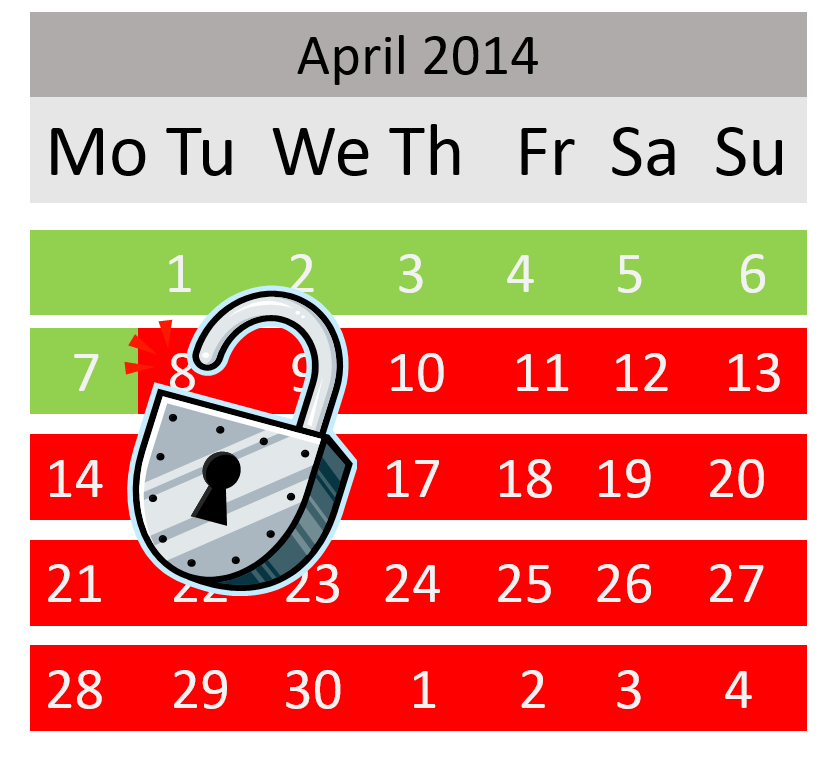
8 April 2014On 8 April 2014 , office support for Microsoft’s Windows XP and Microsoft Office 2003 will come to an end.  Not the end of the world, you’d think, but if your organisation keeps personal information on those versions, this is a significant problem.

Though PCs will continue to run, the issue is that Microsoft will not be providing any further updates or fixes to these products. This means that in the event of any security flaw, your system will be vulnerable, and so in turn will any personal data you hold.

It is inevitable that, over time, attackers will increasingly find the vulnerabilities within these products, which will provide them with more and more opportunities to access and manipulate your systems.  To prevent the risk of personal data breaches in these circumstances, the best advice is to migrate to a supported system before the deadline of 8th April.

It’s not just Microsoft where stopping system support is an issue – the same is true of other providers who do not support their systems.  So it’s well worth making sure that you and your organisation have ‘appropriate technical organisational measures in place to keep individuals’ personal data safe.

Failure to do so puts you in breach of the Data Protection Act, and the ICO has the power to levy a fine of up to £500,000 to any organisation whose failure to comply with the DPA has led to serious issues of data security.

The size of fine varies enormously depending on the scale and potential damage caused by the breach.  For example the ICO has recently fined the British Pregnancy Advice Service £200,000 after a hacker obtained thousands of individuals’ personal details due entirely to poor data security.  And, on a smaller scale, the owner of a loans company, Jala Transport, was fined by the ICO after his car was broken into.  The thief stole £3,600 and a hard drive. Even though the hard drive was password protected, the data within was not encrypted and it included customers’ names, dates of birth, payments made, and the identity documents provided to support the loan application.  His fine could have been as high as £70,000, but was reduced to £5,000 to reflect the limited financial resources of the company and the fact that the breach was reported voluntarily.

In both cases, the breaches were perpetrated by a malicious third party.  But it was the lack of the businesses’ security and protection of the personal data that was the root cause of the fines. This is why it is so important that companies remain ready for the security issues which will inevitably arise when their service providers switch off support – whether the provider is Microsoft or another.

Data Compliant helps businesses build policies and processes to enable them to become and remain secure and compliant both in terms of systems and governance – if you have any concerns over your data security, don’t hesitate to contact us on 01787 277742 or email tony@datacompliant.co.uk

Electronic Communications – ICO Updates March 2014

Last week, the Information Commissioner’s Office issued PECR guidelines with updates that are very much in line with the presentations they gave at the ICO conference on March 3rd. The changes impact marketing in two key areas:

Time Limits for Consent – the new guide states that there is “no fixed time limit” in relation to the validity of consent between consent being obtained and the first contact being made.

Essentially, the period between consent and first contact depends on two main areas

  • the expectation of the customer
  • the context under which consent was obtained.

The new PECR guidelines reflect this interpretation stating:  “consent … will remain valid as long as it is still reasonable to treat it as an ongoing indication of the person’s current wishes.”  At the conference, the ICO stated that, for example in the case of annual renewals, “it is reasonable that consent may be relied upon 12 months after consent was obtained”. However, during the same presentation the ICO categorically stated that they do not accept the concept of indefinite 3rd party consent.  This position is included within the new guidelines by “…even if consent is not withdrawn, it will become less reliable as time passes.”

Third party mailing list – there is a tricky area within the whole area of use of a third party mailing list for emails, texts and automatic telephone calls.  PECR requires that the customer has notified the data user that he or she consents specifically to the user’s message.  Indirect consent, of course, does not meet that requirement as the consumer has not notified the data user – he or she has notified a third party.

Although it is best practice to send marketing texts or emails only where you have yourself obtained consent, the ICO has made it clear that use of third party mailing lists can be acceptable, as long as:

  • the third party has made absolutely clear and transparent the use to which the data is to be put.   “In essence the customer must have anticipated that their details would be passed to you and that they were consenting to messages from you. “
  • you as the data user are cautious and carry out due diligence, seeking evidence that consent covers your organisation and the medium through which you want to communicate – email, text and automated calls each require specific consent for that specific communication channel.

Within the ICO, there is a small team investigating PECR breaches and taking appropriate complaint-based actions, which range from civil monetary penalties,  enforcement orders, criminal prosecution, and publication of who has been prosecuted and why.  

At the Conference, the ICO shared information on the number of PECR investigations which are taking or have taken place.

To date 296,000 concerns have been reported, as a result of which just 7 monetary penalty notices have been served.  In addition, there have been 11 formal undertakings, 19 enforcement notices and – as at 3 March – there were 79 investigations ongoing. 

The number of fines is low because ,in order to levy a monetary fine, “substantial damage” must  be caused by the breach – and the impact of a text message is not generally enough to trip businesses into the area of monetary penalties.
There is a proposal to lower the PECR threshold, and the expectation is that we can expect to see some sort of legislative change by the end of the year.

It is clear from the seriousness with which the ICO treats PECR breaches, that the ICO, like the recently approved EU Data Protection regulations, is trying to put the individual back in control of their own data.  And, for those of us who believe that targeted ‘one-to-one’ marketing is the way to the future, surely making sure that a prospect really wants to receive your message is not such a bad thing?

If you have any concerns over the changes to PECR guidelines, or would like to discuss your business’s personal data compliance and security, please call us on 01787 277742, or email victoria@datacompliant.co.uk

NHS Data Sharing – why the delay?

iStock_000006820636Medium

It’s good to see that common sense has prevailed, and the roll-out of care.data has been deferred until Autumn – primarily, it would seem, to allow time to make absolutely certain that all patients have been made aware of the plans to do so.

The media, privacy lobby groups and, most notably, both the ICO and The Royal College of General Practitioners flagged their concerns that communicating the NHS data sharing plans with patients had been inadequate, leaving many individuals throughout the country unaware either of the plans to share their sensitive, confidential patient data, or indeed of their right to refuse to participate (see more here about how and why your patient data is to be held in a central NHS database).

There has been some attempt to inform the public – primarily by GPs (mine was excellent, providing information and opt-in / opt-out forms with repeat prescriptions; issuing leaflets and showing posters in the surgery; and showing information on the website ).  The NHS distributed some 22 million leaflets which were apparently delivered in January / February, but there has been a great deal of criticism of the leaflet’s creative approach, which has been described as bland … appalling … one-sided … and more.  I have to say, I never received it … or if I did, I threw it away unread on the assumption that it was “junk mail”.

I was interested to read what the Royal College of General Practitioners think, and of their own strong desire that GPs, patients and the nation are all properly informed and able to make their own decision whether to support the development of the NHS database or opt out. http://www.rcgp.org.uk/news/2014/february/college-welcomes-decision-to-delay-care-data.aspx

On the subject of making people aware … I find it quite fascinating to watch the government’s delight in using broadcast channels like TV and radio to promote themselves when it suits them.  Yet they seem curiously reluctant to use these same channels to inform the public of an issue as significant and important as the sharing of our own sensitive and confidential medical data.

However, it is quite clear that the NHS must now decide how it will ramp up its communication campaign before the Autumn in order to satisfy the public, the ICO, the RCGP and the media.  Only then will it be possible for the launch of care.data to take place.

Data Compliant Ltd provides advice on data compliance, data security, and runs training classes and workshops.  If you or your business have any concerns over your data being compliant and secure, please contact Michelle or Victoria.  

victoria@datacompliant.co.uk                        michelle@datacompliant.co.uk


Delays to the EU Data Protection Regulation …

iStock_000025602036SmallThere has been little progress on the draft EU Data Protection Regulation since October.  However, the Greek Government took over the Presidency of the Council of the European Union in January 2014, so it is now up to them to progress this legislation.

It is clear that delays are inevitable. Even if the draft is agreed at the Justice and Home Affairs Ministers Council meeting in June, the process then continues with three-party negotiations between Justice and Home Affairs Ministers, the European Commission and the European Parliament.

That process is unlikely to start before the autumn, which would mean that the EU Regulation must be delayed until the end of this year or, more likely, until early 2015.  This will delay the law coming into force until the end of 2016 at the earliest, and more likely in 2017.

Three aspects of the new legislation that we have not covered in previous blogs are:

·         International Data Transfers:  this is a new certification programme which will allow data controllers and processers to apply for certification under The European Data Protection Seal. The certificate will be gained through an audit of data processing activity and certification granted by data protection authorities or accredited third parties.  The European Data Protection Seal will enable legitimate transfers of data outside the EEA to recipients who also hold a Seal.

·         Data Protection Officers:  though still in the draft stage, it is clear that firms will be encouraged or required to appoint data protection officers (DPOs) to ensure an organisation uses, controls and processes data compliantly, nationally and / or globally.  There are 500 million citizens within Europe, and currently, a DPO is to be appointed if an organisation processes data on more than 5,000 individuals per annum.

·         One Stop Shop continues to be a subject of fierce debate.  It is significantly different from current legislation where a business is always subject to the data protection authority in each and every country in which it operates.  Under the new One Stop Shop rule, a business which operates in several of the EU Member states would only be subject to the national data protection authority in the country where its Head Office is based.

The debate relates to citizens’ human rights – any data protection complaint made against a company whose head office location is in a different country, will mean that individuals must complain to their own national data protection authority, who will then pass it onto the authority in the relevant country.  This complexity will make it difficult for individuals to complain simply and effectively, and argument rages over whether and to what extent this might undermine human rights.

If you are concerned about how the new European legislation might affect you or your business, don’t hesitate to get in touch with Victoria or Michelle on 01787 277742.  Or emailvictoria@tuffillverner.co.uk  or michelle@tuffillverner.co.uk

Safe Harbor – how does it work?

safe harbor pic

The Data Protection Act 1998 prohibits the transfer of personal data to non-European Union countries unless those countries meet the EU “adequacy” standard for privacy protection. Although both the US and EU profess to similar goals of protecting individuals’ privacy, their actual approaches are quite different.

As a result, the US Department of Commerce consulted with the European Commission, and developed the “Safe Harbor” framework – a cross-border data transfer mechanism that complies with European data protection laws and allows businesses to move personal data from the EU to the United States.  There is a similar but separate framework between the US and Switzerland.

To join the Safe Harbor framework, a company self-certifies to the Department of Commerce that it complies with seven data privacy principles (notice, choice, onward transfer, security, data integrity, access and enforcement) and that it meets the EU adequacy standard.  This self-certification needs to be renewed annually.  If a company fails to complete the annual re-certification process in time, the organisation’s certification is changed to “not current”.

The Federal Trade Commission addresses any violations – indeed on 21st January 2014, the FTC identified twelve companies who claimed in their marketing material that they currently complied with the US – EU Safe Harbor Framework, but who had allowed their certification to expire.  The twelve companies range from technology, consumer products and accounting – as well as National Football League teams.

To “set an example” and to help ensure the ongoing integrity of the Safe Harbor framework, the twelve companies have been prohibited from misrepresenting the extent to which they participate in any privacy or security programme sponsored by the government or any other self-regulatory or standard-setting organisation (including the Safe Harbor Framework).

It is worth noting that agreeing to adhere to the Safe Harbor Frameworks is a permanent undertaking in that an organisation must continue to apply the Safe Harbor Privacy Principles to personal data obtained through the Safe Harbour Frameworks for as long as the organisation stores, uses or discloses the data, even if the organisation has left the Safe Harbor.

There is a Safe Harbor list, which anybody can check to verify an organisation’s status:   https://safeharbor.export.gov/list.aspx

If you are planning to transfer data between the EU and the US, and would like us to help you, just call Michelle or Victoria on 01787 277742 or email victoria@tuffillverner.co.uk or michelle@tuffillverner.co.uk

NHS … patient data … what’s next?

According to the ICO, there were 388 data breaches relating to health data in the first nine months of 2013.  That is 34% of all the data breaches in the UK during the same period, and the proportion has increased from 27% at the end of March to 38% by the end of September 2013.  The chart below compares the number data breach levels by industry sector over the same period.  Given the sensitivity of the health data held by medical organisations in this country, those are shocking statistics.Data breaches by sector to Sept 30 2013

Centralised medical records database

Despite this poor track record, very soon the NHS is going to combine all our medical records into one massive database. Every GP practice in the UK will shortly begin to disclose their patients’ personal and sensitive data to care.data at the Health and Social Care information Centre (HSCIC).  The process is monthly, automatic, and assumes patient consent unless patients actively opt out – which is not necessarily a simple process.

nhs databaseSo what does this mean to patients?  Essentially, personal confidential data (PCD) such as family history, vaccinations, diagnoses, referrals, blood pressure, BMI, cholesterol and NHS prescriptions and more will be extracted from GP systems and shared with care.data.

In order to match data from the GP surgeries with data acquired by the HSCIC from other sources (such as hospitals) identifying data such as data of birth, postcode, NHS number and gender will be included within the data extracts.  Once matched across all the data sources, the data is pseudonymised (ie identifying characteristics are removed).

Once an individual is flagged as “deceased” no further data will be collected – though the data already provided will continue to be processed by the HSCIC.

medical data chartsWhat are the benefits?

If it were possible to trust the security and intentions of those collecting the data, there are some fantastic potential benefits, for example improved patient care; the effective prevention, treatment and management of illness; hospital performance, management of NHS resources; or the analysis and understanding of specific treatment benefits; even planning new health services.

What are the risks?

The poor track record of the NHS in terms of protecting our medical data is alarming and raises concerns over confidentiality of our medical records.  In addition, there are increasing numbers of private companies who provide services to the NHS, from physiotherapists to care homes; from private hospitals to insurance companies.  Members of the public are likely to be uneasy about private companies benefiting from their health data, and equally concerned that their GP will no longer be the “gatekeeper” of their confidential medical data.

Furthermore, although the data will be pseudonymised, single-minded analysts may undoubtedly try and will probably succeed to some degree in finding a way of matching the data against other commercial data sets to “re-identify” the individuals.

Who can use the data?

The data can be released for five listed reasons:  health intelligence, health improvement, audit, health service research and service planning. That’s a pretty broad spectrum, and it is evident that the number and range of potential customers for this centralised database of our medical records is enormous.

For example, how long it will be before insurers persuade the HSCIC that it is to the benefit of the health and social care system that they should model and predict medical claims rates based on the UK’s centralised medical database, and use the findings to price their medical insurance policies accordingly.

Can GP practices opt out?

Doctor Data ControllerThe Health and Social Care Act 2012 creates a statutory obligation for GP practices to disclose the information as directed.  GPs are unable to refuse to do so as such refusal would put them in breach of the statutory requirement.

But because the GP practice is actually the “data controller” of their patients’ confidential medical records, GP practices are also responsible for ensuring that their patients’ personal and sensitive data is handled fairly (as defined under the Data Protection Act 1998).

So it is up to GPs to ensure that patients are aware that their data will be shared with the HSCIC, that the HSCIC has powers to extract personal confidential data, and, arguably, what the HSCIC intends to do with the data.

And if a patient claims they were unaware that their data was to be shared, it would be the GP practice who would be investigated by the ICO.

The GP practices remain data controllers of the data they hold within the practice, but are no longer responsible for the data once it has been disclosed to the HSCIC.  Instead the HSCIC and NHS England become joint data controllers who are obliged to comply with the Data Protection Act.  NHS England will determine the “Purpose” for the data collection, while the HSCIC will determine the manner of processing.

How do patients opt out?

Normally one would expect the sharing of data of this sensitivity and confidentiality to be subject to patient opt-in, rather than the NHS assuming consent.  However, the Health and Social Care Act 2012 empowers the HSCIC to require providers (eg your GP practice) to send it personal confidential data when directed to do so.  And the Act overrides the requirement to seek patient consent.

A patient can inform their GP of their wish to opt out, and no reason is required.  It is worth noting that the right to opt out has been implemented as a constitutional rather than a legal right.  Having opted out, it is up to the GP practice to ensure that the right code is appended to the legal record.

However, the patient has no right to prevent his or her medical data leaving the GP practice if such data carries no identifiable information as this is anonymous data rather than personal data.  The question, really, is what is “identifiable information”?  It is DOB? Arguably in some circumstances, it may be.  And surely an NHS number is identifiable information.

The Secretary of State for Health has given a commitment that individuals’ objections to disclosure ot the HSCIC will be respected in “all but exceptional circumstance” (for example, a civil emergency).

Is the process compliant?

You could argue that this data sharing activity defies the second principle of the Data Protection Act:  “Personal data shall be obtained only for one or more specified and lawful purposes, and shall not be further processed in any manner incompatible with the purpose or those purposes”.  In my view, you don’t talk to your doctor about a medical condition for any purpose other than to have him solve – or try to solve the problem for you.  And while that may include prescriptions, or visits to consultants, hospitals and clinics, making our medical records data available to commercial organisations cannot possibly be considered the “Purpose”.