Category Archives: UK Data News

Surveillance Camera Code of Practice – 12 Principles

security cameraDo you use a surveillance camera system within your organisation?  If so, it’s worth noting that the Surveillance Camera Code of Practice must not only comply with the Data Protection Act and its 8 Principles, but also provides its own 12 guiding principles:

  1. Purpose: Use of a surveillance camera system must always be for a specified purpose in pursuit of a legitimate aim, and necessary to meet an identified pressing need
  1. Privacy Impact: Use of a surveillance camera system must take into account its effect on individuals and their privacy, with regular reviews to ensure its use remains justified
  1. Transparency: There must be as much transparency in the use of a surveillance camera system as possible, including a published contact point for access to information and complaints.
  1. Accountability: There must be clear responsibility and accountability for all surveillance camera system activities including images and information collected, held and used.
  1. Policies and procedures: Clear rules, policies and procedures must be in place before a surveillance camera system is used, and these must be communicated to all who need to comply with them
  1. Relevance and Retention: No more images and information should be stored than that which is strictly required for the stated purpose of a surveillance camera system, and such images and information should be deleted once their purposes have been discharged
  1. Access to retained images and information should be restricted. There must be clearly defined rules on who may gain access for what purpose; the disclosure of images and information should only take place where it is necessary for such a purpose or for law enforcement purposes
  1. Standards: Surveillance camera system operators should consider any approved operational, technical and competency standards relevant to a system and its purpose, and work to meet and maintain those standards
  1. Security: Surveillance camera system images and information should be subject to appropriate security measures to safeguard against unauthorised access and use.
  2. Audit: Effective review and audit mechanisms should be in place to ensure legal requirements, policies and standards are complied with in practice.  Regular reports to be published.
  3. Public Safety: When the use of a surveillance camera system is in pursuit of a legitimate aim, and there is a pressing need for its use, it should then be used in the most effective way to support public safety and law enforcement with the aim of processing images and information of evidential value.
  4. Accuracy: Any information used to support a surveillance camera system which compares against a reference database for matching purposes should be accurate and kept up to date.

If you have any concerns about your data compliance in general or your surveillance camera compliance specifically, contact us on 01787 277742.  Or email victoria@datacompliant.co.uk

Services

Data Protection and the ICO

Data privacy

Data Protection Complaints 2013 – 2014

Yesterday I read that the Information Commissioner’s Office handled 259,903 calls to its helpline and has resolved 15,492 data protection complaints last year. This is an increase of 10% over the previous year.  And here’s another staggering figure – the ICO received 161,720 reports from people about spam texts and nuisance calls.

Half the total complaints received related to “subject access”, with a range of organisations about whom complaints were made, including lenders, local government, educational providers and local health providers.

The importance of data protection in business

Organisations and businesses can no longer ignore the importance of data protection governance, compliance and security – they now have no choice but to understand and meet their regulatory requirements to avoid the penalties of non-compliance.  Last year’s attitude to and handling of ‘subject access requests’ is a perfect illustration of the current complacency seen among some data users.

The sheer volume of personal data being collected physically and digitally every day is multiplying at an extraordinary rate and organisations are continuing to find ever more complicated ways of using data.  Use of big data continues to develop with organisations trying to navigate their way through woefully outdated legislation.

The importance of the ICO

As a result, the data protection challenges to business, the consumer and the ICO are spiralling. It’s increasingly important for the data subject to know that a strong, independent body – which means the ICO – can be trusted to keep watch and offer protection.

With this increase in volume and demand, it’s hardly surprising that the ICO is calling for greater powers, greater independence, and additional funding.

Funding is a particularly difficult area as the EU data protection reforms currently propose the removal of the notification requirement and accompanying fees that fund the ICO’s DPA work. Lack of funding will inevitably give rise to cuts in the services provided by the ICO – for example, it has no legal obligation to provide a helpline, and reduced funding makes it unlikely to be able to continue to handle its current – let alone future – volumes of calls a year.

So it’s absolutely vital not only to individuals but also to businesses, organisations, government and the ICO itself that necessary resource, funding, independence and evolving powers are provided to allow the Information Commissioner to continue to protect, update and enforce data protection legislation.

ICO’s internal data security breach

However, it is somewhat unfortunate that at the time the ICO is asking for greater funding, independence and stronger powers, they are also admitting to their own “non-trivial” data breach. The incident was treated as a self-reported breach and was apparently investigated and treated no differently from similar incidents reported to the ICO by others. After an internal investigation the ICO concluded that the likelihood of damage or distress to any affected data subjects was low, and that it did not amount to a serious breach of the Data Protection Act. A full investigation was carried out with recommendations made and adopted.

However, later information suggests that this breach is now linked to a criminal investigation. So the breach investigation has not, seemingly, been closed.

Data Compliant

Services

If you have any concerns over data protection compliance or security, don’t hesitate to get in touch – call 01787 277742 or email victoria@datacompliant.co.uk


Data protection breaches make great news stories …

breach and bad publicity June 2014

I read today that the BBC is in trouble for “lack of transparency” after it apparently rejected 17.9% of requests for information under the Freedom of Information (FOI) Act, and answered fully only 35% of FOI requests.

Bad press causes rise in volume of FOI requests

Much more interesting to me is the information that the number of FOI requests received by the BBC rose by almost a quarter to just under 2,000 during the 2-year period from 2011 and 2013.  The timing of the rise directly coincides with various scandals including the Jimmy Savile investigation, the profligate spending of £100 million on the disastrous digital archive project and the uproar over the extravagant pay-outs to departed senior executives.  Not, I think, a coincidence.

All publicity is good publicity …

Some claim that all publicity is good publicity. This is simply untrue.  Take data breaches for example. The frequency of data compliance and security breaches is leading to growing press interest and coverage, which in turn is rapidly educating the general population – ie the data subjects (and that’s you and me). And when huge players like eBay and Morrisons are affected – well, breaches of that magnitude become a dripping joint to the media.  The news spreads like wildfire, causing further lack of confidence that big companies have any respect for our privacy or personal data.

So as data subjects, we are more likely than ever to demand that organisations account for the way in which they handle and use our personal data; and to take steps to understand the data held about us and how it is used.  Subject access requests are a case in point, and a well-publicised data security or compliance breach inevitably results in increased subject access requests.

Worse yet, many businesses still don’t know what their legal obligations are once a subject access request is received – which means they run the risk of a further potential breach.

Subject Access Requests (SARs)

Individuals are perfectly entitled to request a copy of the personal data an organisation holds on them.  Once an SAR is received, generally the organisation has a maximum of 40 days to respond and provide the information.  Most business can charge a fee of up to £10 for provision of the data – more complex requests, such as those received by schools and the NHS use a sliding scale up to a maximum of £50.  Every company should have a documented Subject Access Request policy, and keep records of SARs received, and the way – and timescale – in which they have been handled.

If you have any concerns about SARs specifically, or your data governance, data compliance or data security in general, we’ll be happy to have a chat or answer your queries.  Just call us or email victoria@datacompliant.co.uk

Data Security – Microsoft Office XP and 2003

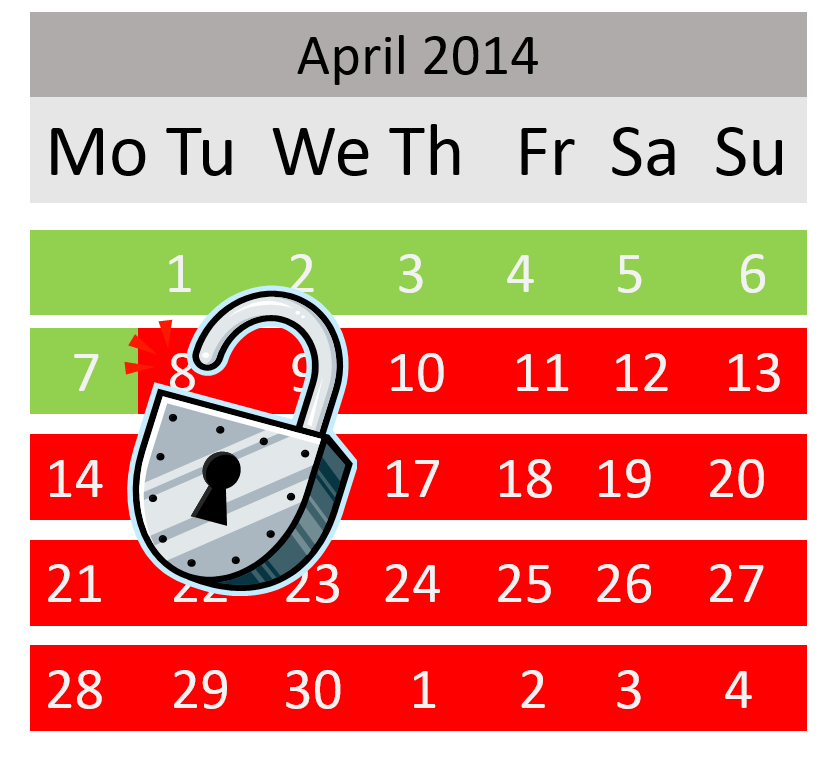
8 April 2014On 8 April 2014 , office support for Microsoft’s Windows XP and Microsoft Office 2003 will come to an end.  Not the end of the world, you’d think, but if your organisation keeps personal information on those versions, this is a significant problem.

Though PCs will continue to run, the issue is that Microsoft will not be providing any further updates or fixes to these products. This means that in the event of any security flaw, your system will be vulnerable, and so in turn will any personal data you hold.

It is inevitable that, over time, attackers will increasingly find the vulnerabilities within these products, which will provide them with more and more opportunities to access and manipulate your systems.  To prevent the risk of personal data breaches in these circumstances, the best advice is to migrate to a supported system before the deadline of 8th April.

It’s not just Microsoft where stopping system support is an issue – the same is true of other providers who do not support their systems.  So it’s well worth making sure that you and your organisation have ‘appropriate technical organisational measures in place to keep individuals’ personal data safe.

Failure to do so puts you in breach of the Data Protection Act, and the ICO has the power to levy a fine of up to £500,000 to any organisation whose failure to comply with the DPA has led to serious issues of data security.

The size of fine varies enormously depending on the scale and potential damage caused by the breach.  For example the ICO has recently fined the British Pregnancy Advice Service £200,000 after a hacker obtained thousands of individuals’ personal details due entirely to poor data security.  And, on a smaller scale, the owner of a loans company, Jala Transport, was fined by the ICO after his car was broken into.  The thief stole £3,600 and a hard drive. Even though the hard drive was password protected, the data within was not encrypted and it included customers’ names, dates of birth, payments made, and the identity documents provided to support the loan application.  His fine could have been as high as £70,000, but was reduced to £5,000 to reflect the limited financial resources of the company and the fact that the breach was reported voluntarily.

In both cases, the breaches were perpetrated by a malicious third party.  But it was the lack of the businesses’ security and protection of the personal data that was the root cause of the fines. This is why it is so important that companies remain ready for the security issues which will inevitably arise when their service providers switch off support – whether the provider is Microsoft or another.

Data Compliant helps businesses build policies and processes to enable them to become and remain secure and compliant both in terms of systems and governance – if you have any concerns over your data security, don’t hesitate to contact us on 01787 277742 or email tony@datacompliant.co.uk

Electronic Communications – ICO Updates March 2014

Last week, the Information Commissioner’s Office issued PECR guidelines with updates that are very much in line with the presentations they gave at the ICO conference on March 3rd. The changes impact marketing in two key areas:

Time Limits for Consent – the new guide states that there is “no fixed time limit” in relation to the validity of consent between consent being obtained and the first contact being made.

Essentially, the period between consent and first contact depends on two main areas

  • the expectation of the customer
  • the context under which consent was obtained.

The new PECR guidelines reflect this interpretation stating:  “consent … will remain valid as long as it is still reasonable to treat it as an ongoing indication of the person’s current wishes.”  At the conference, the ICO stated that, for example in the case of annual renewals, “it is reasonable that consent may be relied upon 12 months after consent was obtained”. However, during the same presentation the ICO categorically stated that they do not accept the concept of indefinite 3rd party consent.  This position is included within the new guidelines by “…even if consent is not withdrawn, it will become less reliable as time passes.”

Third party mailing list – there is a tricky area within the whole area of use of a third party mailing list for emails, texts and automatic telephone calls.  PECR requires that the customer has notified the data user that he or she consents specifically to the user’s message.  Indirect consent, of course, does not meet that requirement as the consumer has not notified the data user – he or she has notified a third party.

Although it is best practice to send marketing texts or emails only where you have yourself obtained consent, the ICO has made it clear that use of third party mailing lists can be acceptable, as long as:

  • the third party has made absolutely clear and transparent the use to which the data is to be put.   “In essence the customer must have anticipated that their details would be passed to you and that they were consenting to messages from you. “
  • you as the data user are cautious and carry out due diligence, seeking evidence that consent covers your organisation and the medium through which you want to communicate – email, text and automated calls each require specific consent for that specific communication channel.

Within the ICO, there is a small team investigating PECR breaches and taking appropriate complaint-based actions, which range from civil monetary penalties,  enforcement orders, criminal prosecution, and publication of who has been prosecuted and why.  

At the Conference, the ICO shared information on the number of PECR investigations which are taking or have taken place.

To date 296,000 concerns have been reported, as a result of which just 7 monetary penalty notices have been served.  In addition, there have been 11 formal undertakings, 19 enforcement notices and – as at 3 March – there were 79 investigations ongoing. 

The number of fines is low because ,in order to levy a monetary fine, “substantial damage” must  be caused by the breach – and the impact of a text message is not generally enough to trip businesses into the area of monetary penalties.
There is a proposal to lower the PECR threshold, and the expectation is that we can expect to see some sort of legislative change by the end of the year.

It is clear from the seriousness with which the ICO treats PECR breaches, that the ICO, like the recently approved EU Data Protection regulations, is trying to put the individual back in control of their own data.  And, for those of us who believe that targeted ‘one-to-one’ marketing is the way to the future, surely making sure that a prospect really wants to receive your message is not such a bad thing?

If you have any concerns over the changes to PECR guidelines, or would like to discuss your business’s personal data compliance and security, please call us on 01787 277742, or email victoria@datacompliant.co.uk

NHS Data Sharing – why the delay?

iStock_000006820636Medium

It’s good to see that common sense has prevailed, and the roll-out of care.data has been deferred until Autumn – primarily, it would seem, to allow time to make absolutely certain that all patients have been made aware of the plans to do so.

The media, privacy lobby groups and, most notably, both the ICO and The Royal College of General Practitioners flagged their concerns that communicating the NHS data sharing plans with patients had been inadequate, leaving many individuals throughout the country unaware either of the plans to share their sensitive, confidential patient data, or indeed of their right to refuse to participate (see more here about how and why your patient data is to be held in a central NHS database).

There has been some attempt to inform the public – primarily by GPs (mine was excellent, providing information and opt-in / opt-out forms with repeat prescriptions; issuing leaflets and showing posters in the surgery; and showing information on the website ).  The NHS distributed some 22 million leaflets which were apparently delivered in January / February, but there has been a great deal of criticism of the leaflet’s creative approach, which has been described as bland … appalling … one-sided … and more.  I have to say, I never received it … or if I did, I threw it away unread on the assumption that it was “junk mail”.

I was interested to read what the Royal College of General Practitioners think, and of their own strong desire that GPs, patients and the nation are all properly informed and able to make their own decision whether to support the development of the NHS database or opt out. http://www.rcgp.org.uk/news/2014/february/college-welcomes-decision-to-delay-care-data.aspx

On the subject of making people aware … I find it quite fascinating to watch the government’s delight in using broadcast channels like TV and radio to promote themselves when it suits them.  Yet they seem curiously reluctant to use these same channels to inform the public of an issue as significant and important as the sharing of our own sensitive and confidential medical data.

However, it is quite clear that the NHS must now decide how it will ramp up its communication campaign before the Autumn in order to satisfy the public, the ICO, the RCGP and the media.  Only then will it be possible for the launch of care.data to take place.

Data Compliant Ltd provides advice on data compliance, data security, and runs training classes and workshops.  If you or your business have any concerns over your data being compliant and secure, please contact Michelle or Victoria.  

victoria@datacompliant.co.uk                        michelle@datacompliant.co.uk


NHS … patient data … what’s next?

According to the ICO, there were 388 data breaches relating to health data in the first nine months of 2013.  That is 34% of all the data breaches in the UK during the same period, and the proportion has increased from 27% at the end of March to 38% by the end of September 2013.  The chart below compares the number data breach levels by industry sector over the same period.  Given the sensitivity of the health data held by medical organisations in this country, those are shocking statistics.Data breaches by sector to Sept 30 2013

Centralised medical records database

Despite this poor track record, very soon the NHS is going to combine all our medical records into one massive database. Every GP practice in the UK will shortly begin to disclose their patients’ personal and sensitive data to care.data at the Health and Social Care information Centre (HSCIC).  The process is monthly, automatic, and assumes patient consent unless patients actively opt out – which is not necessarily a simple process.

nhs databaseSo what does this mean to patients?  Essentially, personal confidential data (PCD) such as family history, vaccinations, diagnoses, referrals, blood pressure, BMI, cholesterol and NHS prescriptions and more will be extracted from GP systems and shared with care.data.

In order to match data from the GP surgeries with data acquired by the HSCIC from other sources (such as hospitals) identifying data such as data of birth, postcode, NHS number and gender will be included within the data extracts.  Once matched across all the data sources, the data is pseudonymised (ie identifying characteristics are removed).

Once an individual is flagged as “deceased” no further data will be collected – though the data already provided will continue to be processed by the HSCIC.

medical data chartsWhat are the benefits?

If it were possible to trust the security and intentions of those collecting the data, there are some fantastic potential benefits, for example improved patient care; the effective prevention, treatment and management of illness; hospital performance, management of NHS resources; or the analysis and understanding of specific treatment benefits; even planning new health services.

What are the risks?

The poor track record of the NHS in terms of protecting our medical data is alarming and raises concerns over confidentiality of our medical records.  In addition, there are increasing numbers of private companies who provide services to the NHS, from physiotherapists to care homes; from private hospitals to insurance companies.  Members of the public are likely to be uneasy about private companies benefiting from their health data, and equally concerned that their GP will no longer be the “gatekeeper” of their confidential medical data.

Furthermore, although the data will be pseudonymised, single-minded analysts may undoubtedly try and will probably succeed to some degree in finding a way of matching the data against other commercial data sets to “re-identify” the individuals.

Who can use the data?

The data can be released for five listed reasons:  health intelligence, health improvement, audit, health service research and service planning. That’s a pretty broad spectrum, and it is evident that the number and range of potential customers for this centralised database of our medical records is enormous.

For example, how long it will be before insurers persuade the HSCIC that it is to the benefit of the health and social care system that they should model and predict medical claims rates based on the UK’s centralised medical database, and use the findings to price their medical insurance policies accordingly.

Can GP practices opt out?

Doctor Data ControllerThe Health and Social Care Act 2012 creates a statutory obligation for GP practices to disclose the information as directed.  GPs are unable to refuse to do so as such refusal would put them in breach of the statutory requirement.

But because the GP practice is actually the “data controller” of their patients’ confidential medical records, GP practices are also responsible for ensuring that their patients’ personal and sensitive data is handled fairly (as defined under the Data Protection Act 1998).

So it is up to GPs to ensure that patients are aware that their data will be shared with the HSCIC, that the HSCIC has powers to extract personal confidential data, and, arguably, what the HSCIC intends to do with the data.

And if a patient claims they were unaware that their data was to be shared, it would be the GP practice who would be investigated by the ICO.

The GP practices remain data controllers of the data they hold within the practice, but are no longer responsible for the data once it has been disclosed to the HSCIC.  Instead the HSCIC and NHS England become joint data controllers who are obliged to comply with the Data Protection Act.  NHS England will determine the “Purpose” for the data collection, while the HSCIC will determine the manner of processing.

How do patients opt out?

Normally one would expect the sharing of data of this sensitivity and confidentiality to be subject to patient opt-in, rather than the NHS assuming consent.  However, the Health and Social Care Act 2012 empowers the HSCIC to require providers (eg your GP practice) to send it personal confidential data when directed to do so.  And the Act overrides the requirement to seek patient consent.

A patient can inform their GP of their wish to opt out, and no reason is required.  It is worth noting that the right to opt out has been implemented as a constitutional rather than a legal right.  Having opted out, it is up to the GP practice to ensure that the right code is appended to the legal record.

However, the patient has no right to prevent his or her medical data leaving the GP practice if such data carries no identifiable information as this is anonymous data rather than personal data.  The question, really, is what is “identifiable information”?  It is DOB? Arguably in some circumstances, it may be.  And surely an NHS number is identifiable information.

The Secretary of State for Health has given a commitment that individuals’ objections to disclosure ot the HSCIC will be respected in “all but exceptional circumstance” (for example, a civil emergency).

Is the process compliant?

You could argue that this data sharing activity defies the second principle of the Data Protection Act:  “Personal data shall be obtained only for one or more specified and lawful purposes, and shall not be further processed in any manner incompatible with the purpose or those purposes”.  In my view, you don’t talk to your doctor about a medical condition for any purpose other than to have him solve – or try to solve the problem for you.  And while that may include prescriptions, or visits to consultants, hospitals and clinics, making our medical records data available to commercial organisations cannot possibly be considered the “Purpose”.

Data Compliance October Round-up UK

Meanwhile, back in the UK …

Telephone iconTelemarketing – Caller identification spoofing …

Earlier this week, Canada, the United States and the United Kingdom issued a joint statement making it clear that they intend to combine their resources to tackle the problem of caller ID spoofing.

Spoofing is a practice conducted by telemarketers who want to conceal their true identity rather than fulfil their legal obligation to identify themselves.  Spoofers provide their caller ID with false information which may be a string of digits, or a random or stolen number belonging to a real person or organisation.   It is on the increase, and makes it particularly difficult for the authorities to track down those responsible for non-compliant or illegal calls.

The various agencies responsible for enforcing telemarketing and privacy laws announced that they will coordinate their efforts through the international law enforcement network of the London Action Plan and the International Do Not Call Network. If they need the telecoms industry to provide help, they will ask those organisations within their respective countries.

Next steps are exploratory discussions, to be held later this month, to identify options focusing on enforcement, industry compliance and consumer education, technology and regulatory issues with the goal of considering solutions available to stop spoofing and to take action against those responsible.

DATA BREACHES AND FINES

What a monumental blunder …

iStock_000012526327SmallWe heard yesterday that The Ministry of Justice was on the receiving end of the ICO’s judgement, when it received a fine of £140,000 – after details of ALL the prisoners serving time at HMP Cardiff were emailed to three of the inmates’ families.

The fine goes back to 2011 – when, on 2nd August, the recipients received an email from a prison clerk which included a file containing details of the 1,182 inmates – including names, ethnicity, addresses, length of sentence, release dates, and the offence codes.  Worse yet – this wasn’t the first time such a breach had occurred.  Within the previous four weeks, the same error occurred twice – with details sent to different inmates’ families.

The ICO’s investigation found:

  • Clear lack of management and supervision at the prison, where the clerk concerned was found to have received limited training and experience, though he was left to work unsupervised.
  • Audit trails were lacking and the only reason the breach was identified was because one of the recipients reported receipt of the information to the prison.
  • Problems with the methods used to handle the prisoners’ records, such as the use of unencrypted floppy discs to transfer large volumes of data between networks


The importance of being registered …

handcuffs and money computerIf organisations process personal data, with a very few exceptions, they must register with the ICO and spell out the type of information they process.  Not doing so is a criminal offence – as Hamed Shabani, sole director of payday loan company First Financial, discovered.

After failing to register, he and his company were prosecuted by the ICO and convicted in the Magistrate’s Court. As Director of the company, he was fined a modest £150 and ordered to pay £1,010.66 towards the costs of prosecution and a £20 victims’ surcharge.  In addition, the company itself was fined £500, and also made to pay £1,010.66 towards costs plus a £50 victims’ surcharge.

The total bill of £2,741.32 compares rather unfavourably against the annual £35 notification fee he should have paid.  It is also interesting to note that Hamed Shabani tried to remove his name from the company’s registration at Companies House in an attempt to avoid prosecution.

To quote Stephen Eckersley, ICO Head of Enforcement:

“Pay day loans companies hold important information about some of the most financially vulnerable people in the UK. This makes this company and its director’s decision not to face up to their legal responsibilities all the more concerning.

“Businesses must commit to looking after the information of their customers and this begins with making sure that they are registered. We will continue to use our enforcement powers to safeguard people’s information.”

 The importance of a strong BYOD policy …

mobile commerceBYOD (Bring your own device) continues to be high on the ICO’s priority list – earlier this month, the Royal Veterinary College breached the DPA when a member of staff lost their camera whose memory card held 6 job applicant passport pictures. Unfortunately, the RVC had not briefed staff on how personal information stored for work should be looked after on personal devices.

Nearly half of all UK employees now use their smartphones, tablets, PCs for work purposes, and the number is growing.  As a result, organisations must update their data protection policies to take this into account.

Stephen Eckersley said:

“Organisations must be aware of how people are now storing and using personal information for work and the Royal Veterinary College failed to do this. It is clear that more and more people are now using a personal device, particularly their mobile phones and tablets, for work purposes so its crucial employers are providing guidance and training to staff which covers this use.”

The importance of encryption …

thief stealing laptop from the carIf you are unlucky enough to have a portable device containing personal data stolen, it could cost you much more than simply replacing the device.  As the owner of loans company Jala Transport discovered to his cost.  He stopped his car at a set of traffic lights, only to have his car boot broken into. A hard drive – containing financial details of his 250 customers – was stolen, along with £3,600 cash.

Though the hard drive was password protected, the data within was not encrypted, and it included customers’ names, dates of birth, the payments made, and the identity documents provided to support the loan application.  Because the hard drive had not been encrypted, all those customers were left  wide open to the threat of identity theft.

The penalty could have been £70,000, but was reduced to £5,000 to reflect the limited financial resources of the company and the fact that the breach was reported voluntarily.

Stephen Eckersley said of this case:

“We have continued to warn organisations of all sizes that they must encrypt any personal data stored on portable devices, where the loss of the information could cause clear damage and distress to the customers affected…

 “The penalty will have a real impact on this business and should act as a warning to all businesses owners that they must take adequate steps to keep customers’ information secure.”

Rates of identity fraud continue to rise

Identity fraud is the most significant threat facing the UK, making security a key issue not only for businesses but also for individuals.  Not taking steps to protect personal data just gives fraudsters a license to steal.   This is clearly illustrated by the stats – identity fraud now accounts for over half of all committed fraud and is still growing.  CIFAS confirmed 114,000 frauds in the first half of 201, of which 52% involved impersonation or fake identity details.  An additional 14% of frauds involved account takeover.

All the stories above reflect the importance of being and remaining data compliant and illustrate the penalties that can be imposed by the ICO.  If you would like any advice on how to become and remain compliant, just call us for a no-obligation chat.

001
Victoria Tuffill
01787 277742
victoria@tuffillverner.co.uk

Michelle gallery size compressed
Michelle Evans
01206 392909
michelle@tuffillverner.co.uk

Data Compliance – Monthly Round-Up

September 2013 Round-up

Information Commissioner toughens up Direct Marketing Guidelines

data compliance consentThis month the ICO has published new guidelines for direct marketers, with a particular emphasis on consent.  Those companies who make it difficult for their customers to find the “small print” run the risk of finding their so-called consent is invalid.  Essentially the ICO is looking to tighten up current consent policies, by, for example, putting tighter time limits on the period covered by consent, ensuring that the customer is not forced into consenting as part of any service policy.  Users of personal data are going to need to get used to a greater transparency and trust between themselves and their customers.  It is likely that a more creative approach to obtaining consent will be required – such as an explanation of the benefits designed to appeal to the consumer.

Third party use of data is going to become increasingly difficult too, with the onus put on the user for evidence that consent really has been given to the list provider (see Steve’s article on email marketing success).

If you are concerned that you are not entirely certain what is needed to keep your future campaigns compliant, then contact Victoria – victoria@tuffillverner.co.uk

Unsolicited direct marketing calls – the penalties

telemarketingThe Information Commissioner’s Office (ICO) is clamping down on businesses who make unsolicited direct marketing calls.  The law currently requires the ICO to prove that calls or texts are causing substantial damage or substantial distress before issuing a penalty to the perpetrator.  The ICO is now asking the government to reduce the degree of harm that needs to be proven – the aim is that an investigation would have to simply prove annoyance or nuisance before acting.

The ICO routinely collects data from complaints both to their own office and to TPS, which helps identify organisations who may cause concern.

As a result of that activity, in the first quarter of 2013, the ICO issued their first fine for making unsolicited live marketing calls.  DM Design, was fined £90,000.  In the last quarter the ICO has issued two further monetary penalty notices for making unsolicited calls – against Nationwide Energy Services (£125,000 penalty) and We Claim you Gain (£100,000 penalty) – not insubstantial amounts.

The main topics of cold marketing calls are still PPI, then Energy / Green energy and Accident claims.  These are closely followed by debt management.

Automated calls can be made from outside the UK, in which case the steps to be taken against those companies making the calls are obviously limited.

It is clear that the ICO is determined to make it very plain to all companies and organisations using (or selling) data for marketing purposes, that they must follow the law.

They select a number of companies for monitoring based on the complaints they – and TPS receive. They then review the complaints levels – and it’s amazing what a little fear can do to make even quite large companies adjust their thinking in this area.  For example, Talk Talk saw a massive 75% reduction in complaints in the nine months of monitoring; British Gas a 59% reduction in complaints over the same period; while Scottish Power complaints were reduced by 30%.

If you have any concerns over how to ensure your telemarketing is compliant, please contact Victoria – victoria@tuffillverner.co.uk

Encryption: do you understand the  options available and how you can use them?

data protection encryptionThe Data Protection Act requires organisations that are storing personal information electronically to have appropriate measures in place to keep the information secure. If the loss of this information would cause damage and distress to those affected then the Information Commissioner’s Office (ICO) expect the information to be encrypted.

If it isn’t, then an organisation is not keeping the information secure and leaving themselves open to possible enforcement action. Penalties totalling £700,000 have so far been issued to organisations who have failed to properly encrypt their data.

So it’s definitely worth looking at the different types of encryption available and making them work for your organisation.  If you are thinking about the need for encryption but don’t fully understand the different options available to you, then do contact Tony at tony@tuffillverner.co.uk

Subject access requests – failure to comply can be costly

Keyboard -  blue key AccessFollowing the publication last month of the Subject Access Code of Practice, the handling of subject access requests is becoming increasingly important.  After a complaint from a member of the public, action has been taken against Cardiff City Council systemic failures leading to the inability for the council to respond to individuals’ subject access requests within the 40 day time limit.

So it’s worth noting the importance of tightening up procedures and making sure staff are properly trained to handle such requests in compliance with the DPA.

If you are unclear of your obligations and would like advice on the matter, do contact michelle@tuffillverner.co.uk

Do your employees work from home?  Or use a smartphone?

istock multi media croppedIt is well worth reviewing the measures you have in place to make sure personal information being accessed and used by home workers is being kept secure.  It is now becoming increasingly popular for individuals to work from home, and to access data via tablets and smartphones.

Aberdeen City Council has just been served with a penalty of £100,000 after sensitive personal information relating to the care of vulnerable children was inadvertently posted online by one of their home workers. The information was freely available for a three-month period before a council employee spotted it and the information was taken down.

An investigation found that the council had no means of monitoring how personal information was being accessed and used by their home workers and, worse yet, provided no guidance to help people working from home keep personal information secure.

So do make sure you follow the guidelines, especially if your employees are using smartphones and other personal devices to access personal data outside the office.  If you’d like some information on the sorts of measures you should be taking, please contact Michelle – michelle@tuffillverner.co.uk

New teaching materials will help young people to take control of their information

Great news that the ICO has published new teaching materials for schools to help teachers explain to young people the importance of looking after their personal information.  Especially since a 2011 survey showed that, although 9 out of 10 secondary school pupils were using a social networking website, 60% paid no attention to that website’s privacy policy.

The educational material has been developed by teachers and tailored to specific areas of the curriculum with a focus on helping youngsters understand the value and importance of their personal information and teaching them how they can look after it.

No surprise after Leveson consultation that the Press is deemed to need further guidance on conduct and ethics

Last year’s Leveson Inquiry provided a number of recommendations relating to the conduct and ethics of the press. The most high-profile recommendation for the ICO office was that it should better educate the press about their legal obligations under the DPA.

A consultation was launched in March to find out stakeholder’s views on a potential code of practice to explain the law as it stands. Responses were received from several media companies, individuals, regulators and representative bodies. The responses have raised concerns that any new code of practice would cause confusion with the existing editor’s code!

Tuffill Verner Associates provides data compliance advice – if you have any concerns or are unclear on a particular issue, just drop us an email or give us a call.

victoria@tuffillverner.co.uk   01787 277742 / 07967 148398

michelle@tuffillverner.co.uk   01206 392909 / 07760 257427