

The Information Commissioner’s Office (ICO) has updated its ‘Code of Practice on Subject Access Requests’ chiefly in response to several Court of Appeal decisions made earlier this year related to SARs. Under the Data Protection Act 1998, individuals (‘data subjects’) may request access to their personal information held by a ‘data controller.’
These requests for information are called SARs, and can range from the request for specific or limited information to the request for the entirety of held information including why it is held and to whom it may have been disclosed. The scope of a data controller’s obligations, therefore, will vary from case to case, and will be particularly burdensome for large organisations. Currently, data controllers may charge a fee of up to £10 for processing a SAR, and must provide the requester the relevant information within 40 calendar days. When the GDPR comes into force next year, data controllers will normally not be entitled to charge a fee, irrespective of the inconvenience, and will be expected to provide the information within a shorter timeframe of 30 calendar days.
However, the ICO has revised its guidance in dealing with SARs to prepare controllers for data compliance in light of the Court of Appeal’s judgements on a string of cases in which SARs took place alongside ongoing or threatened litigation – cases which in the opinion of numerous legal commentators, therefore, highlight the potential for widespread abuse of SARs to redress grievances outside the purview of data protection law.
The three key changes to the ICO’s Code
- Scope for assessing ‘disproportionate effort’
The DPA includes an exemption from having to respond to SARs if this would involve ‘disproportionate effort’ for the data controller. Whereas the Code previously indicated that a refusal to provide information on the grounds of it being difficult is unacceptable, it now, with greater lenience, states: “there is scope for assessing whether, in the circumstances of a particular case, supplying a copy of the requested information in permanent form would result in so much work or expense as to outweigh the requester’s right of access to their personal data.” The ICO expects controllers to evaluate the benefits to the data subject as a result of the SAR against the difficulties in complying with the request, and assess whether the scope of the request is reasonable.
- Dialogue between controller and requester
The ICO now advises controllers to enter into dialogue with data subjects following a SAR. This may allow the requester to specify which information they require, thereby refining the request, and making the process more manageable and less likely to result in disproportionate effort. The Code continues to explain how it will take into account both controller’s and subject’s willingness to participate in this dialogue if they receive a complaint about the handling of a SAR.
- Information management systems and redaction of third-party data
The ICO now expects controllers to have information management systems wherein personal information, including archived or back-up data, can be found expediently in anticipation of a SAR. Moreover, the information management system should allow for the redaction of third-party data. This is important, since certain SARs may be declined if the information requested would result some way in the disclosure of personal information about another living person.
Subject Access Requests: For more information have a look at the 4 Court of Appeal decisions that informed the ICO’s revised guidance: Dawson-Damer v Taylor Wessing LLP, Ittihadieh v 5-11 Cheyne Gardens, Deer v Oxford University, Holyoake v Candy
Harry Smithson 7th July 2017




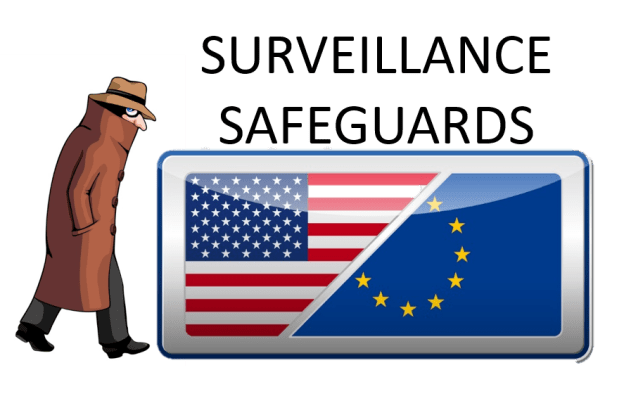 At last agreement has been reached on the EU – US Privacy Shield agreement which now replaces the Safe Harbor agreement. Safe Harbor was ruled invalid in 2015 by the EU Court of Justice, because they said there were not sufficient safeguards for personal data under the voluntary scheme.
 Britain has voted to leave the EU, and at this stage it seems that Parliament is going to honour the results and take us out of the EU. So what does this mean for data protection?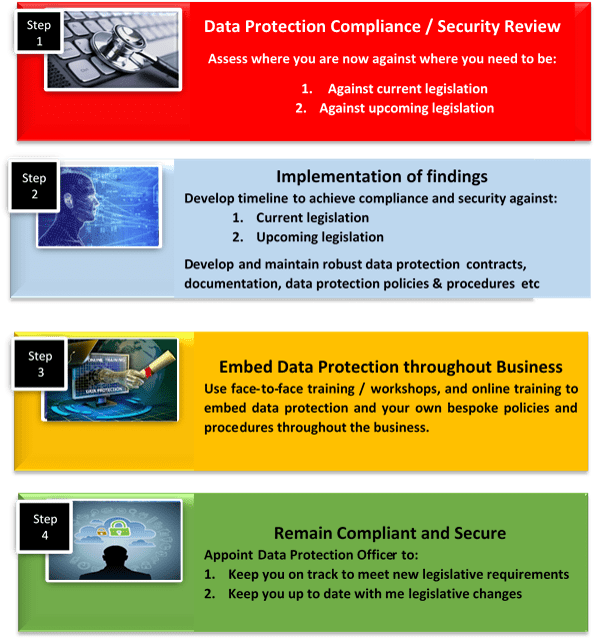
 The General Data Protection Regulation (GDPR) will become law on 25th May 2018. This is the biggest data protection shake-up for twenty years and impacts every organisation in the world that processes the personal data of UK and European citizens.
 The first issue is to understand exactly what personal data you hold. This is not always simple. Data’s a bit like a river, and sometimes the flow can just be too fast to control. It may flow down the main stream, pause in a deep pool, join another river at a junction, then wander off down tributaries, streams and burns, and disappear – only to bubble up unexpectedly in the middle of an isolated moor. Like a river, data can be full of good and exciting things, or stagnant and disgusting.

 The Data Compliant Blog